Key Performance Indicators
Our key performance indicators (KPIs) help the Board and executive management team assess performance against our strategy.
Financial
Group adjusted EBITDA (£m)
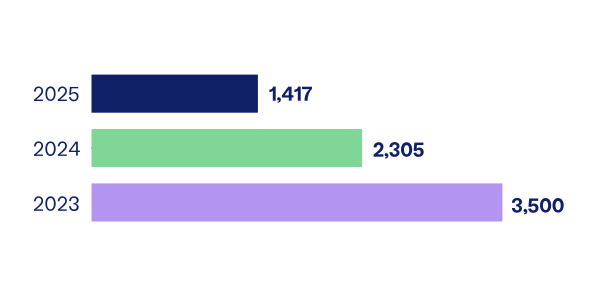
Group adjusted EBITDA reflects earnings before interest, tax, depreciation and tax, and includes the Group’s share of EBITDA from joint ventures and associates.
Group adjusted operating profit (£m)
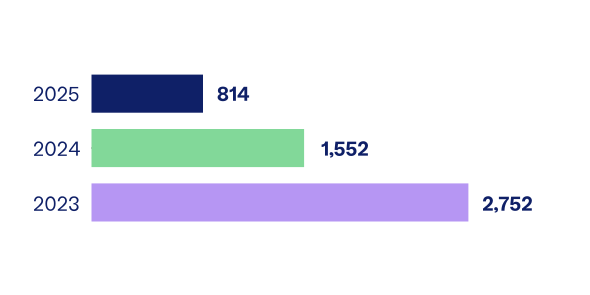
Group adjusted operating profit from continuing operations is one of our fundamental financial measures.
Group adjusted basic earnings per share (EPS)
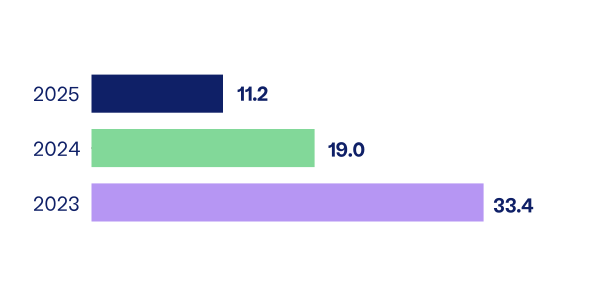
EPS is a standard measure of corporate profitability. Adjusted EPS is used to measure the Group’s underlying performance against its strategic financial framework.
Group free cash flow (£m)
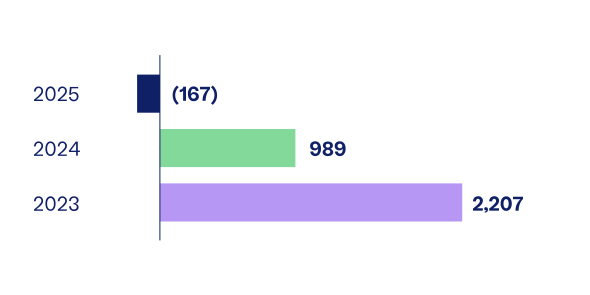
Free cash flow from continuing operations is the Group’s primary measure of cash flow. It reflects the cash generation of the business after taking into account the need to continue to invest.
Non-financial
Home services UK Engineer Net Promoter Score(1)
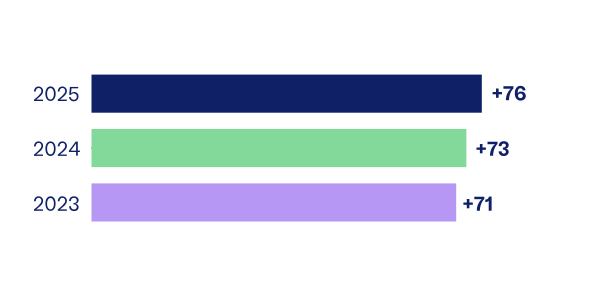
Providing a great customer service builds trust and lasting relationships. With operational improvements and low reschedule rates, customer satisfaction continues to rise. Accordingly, NPS increased by 3 points.
Total retail customers (m)(2)
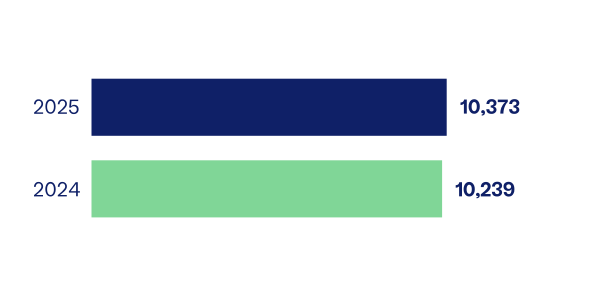
Our ability to attract and retain customers underpins growth. Strong operational performance and greater levels of customer satisfaction, contributed to customer numbers growing across our retail businesses by 1%.
Total recordable injury frequency rate (TRIFR)
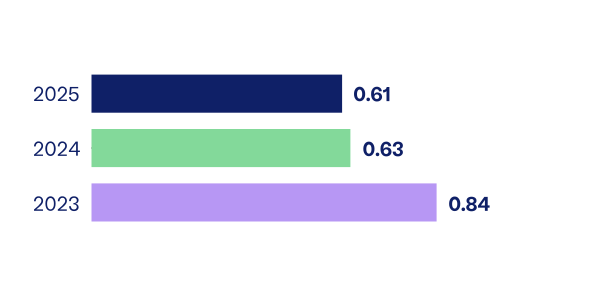
Safety is a top priority. We focused on preventative measures and process reviews, which drove a 3% improvement in TRIFR per 200,000 hours worked. Most incidents related to near misses, minor slips, trips and musculoskeletal injuries.
Colleague engagement (3)
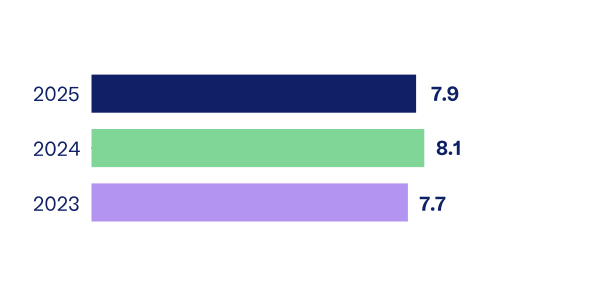
An engaged team is key to driving business success. Despite uncertainty arising from organisational changes, top quartile performance was maintained for the majority of the year before landing at just 0.1 points below the top quartile for our sector and 0.2 points lower than last year.
Total greenhouse gas (GHG) emissions – 50% reduction by 2032 and net zero by 2040 (Base year 2019)(4)
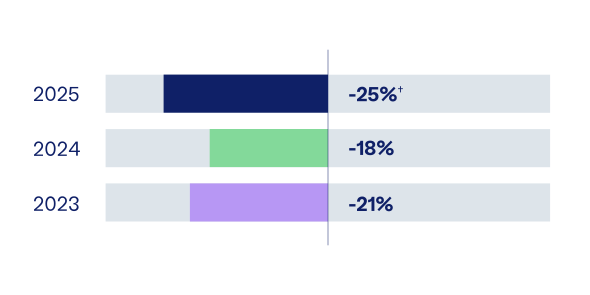
Net zero is key to the future of our business and planet. Reductions in GHG emissions are on track and grew from 18% to 25%. This followed a decrease in emissions from Liquefied Natural Gas shipping, power generation and gas production including an unplanned outage at Barrow Terminal.
Notes
† Included in DNV’s independent limited assurance report. See centrica.com/assurance for more.
(1) Measured independently, through individual questionnaires, the customer’s willingness to recommend British Gas following a Services gas engineer visit.
(2) 2024 has been restated to include Home Energy Supply and Home Services households and Businesses customer sites. Comparable data for 2023 is not available.
(3) Engagement is based on an average score out of 10 and measures how colleagues feel about the Company.
(4) The goal measures Scope 1 (direct) and 2 (indirect) GHG emissions based on operator boundary and is normalised to reflect acquisitions and divestments in line with changes in Group structure against a 2019 base year of 2,120,446tCO2e.