
To meet the Government’s energy transformation goal the UK requires a system-wide approach. We’ve commissioned FTI Consulting to put together a full energy systems model.
Designed to provide meaningful insights to inform the design of the future energy system, the team worked with regulators and policymakers to inform the assumptions and agree the scenarios to be tested.
The report found that a future energy system without an established hydrogen market would leave the UK at risk of huge swings in electricity generation from renewables with no way of addressing the shortfalls and the surplus.
By 2050, electricity generation from renewables could exceed total demand around 15% of the time. Electricity generation from renewables could also rise or fall by as much as 100GW over the course of a single day - making it incredibly difficult to balance the grid.
The report took a ‘whole-systems approach’ to explore a net zero future, reviewing all available and established methods for decarbonising the UK.

Our Key Findings

Hydrogen unlocks the full benefit of renewable electricity generation and minimises the electrical infrastructure required to deliver net zero.

Different types of hydrogen storage can work together to increase resilience & cost-efficiency.

The hydrogen backbone coupled with effectively located production will accelerate progress to net zero.
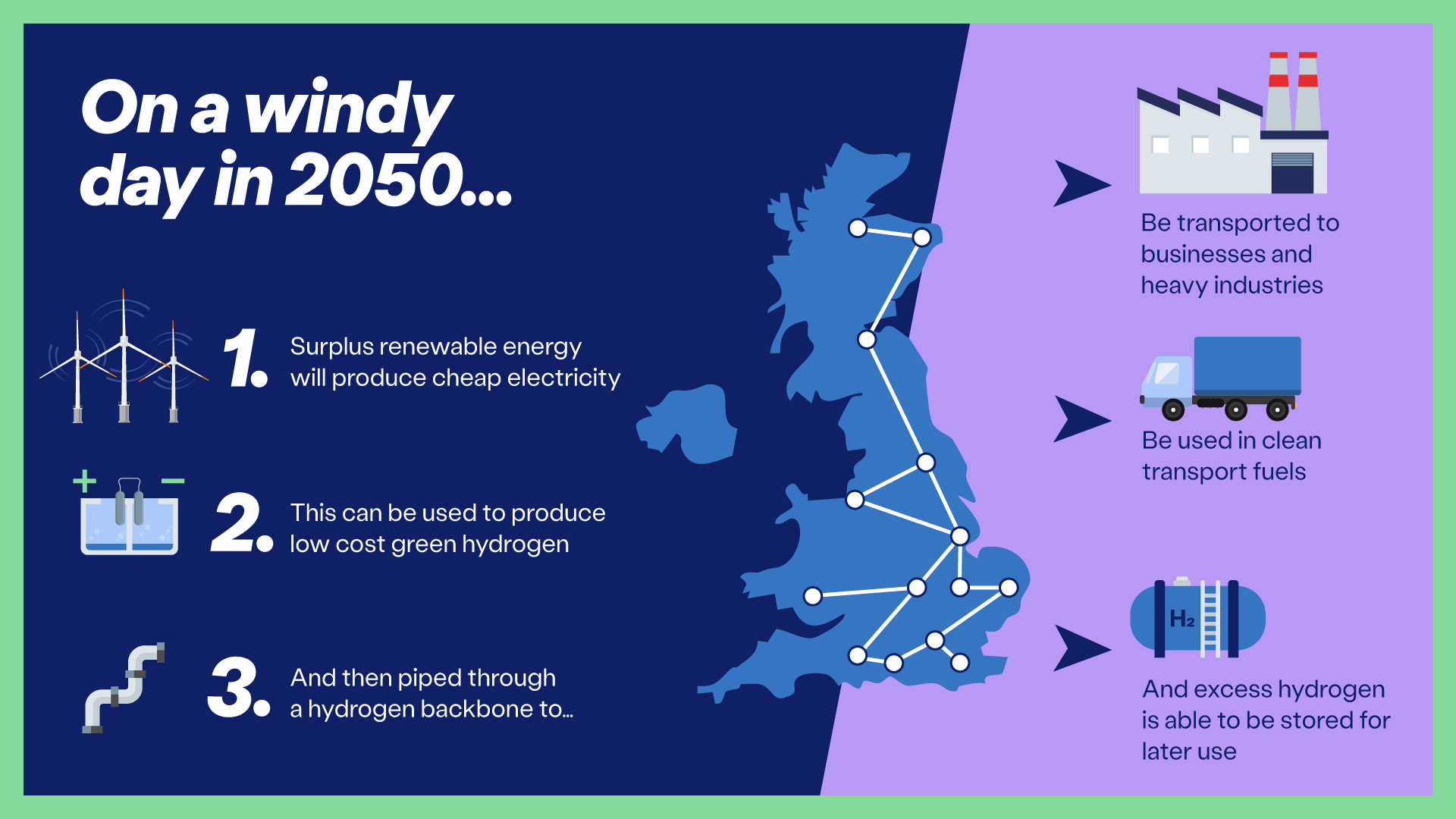
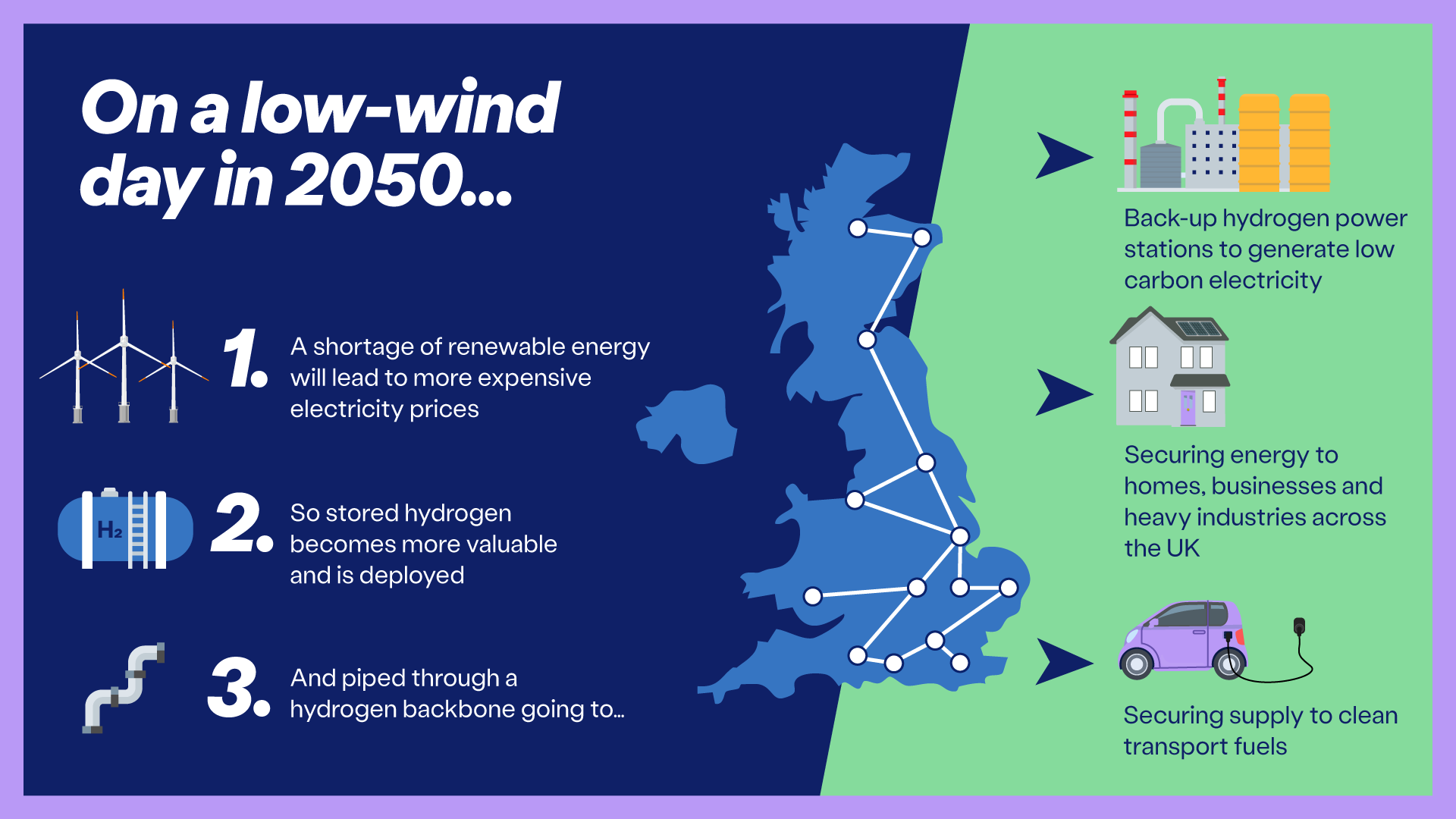
The report also explores the difference between a windy day and a low-wind day in 2050. On a windy day, areas like the north of England and Scotland will produce a lot of renewable energy which can be turned into hydrogen and transported across the UK or stored for the future. On a low-wind day, there is high demand for electricity and this hydrogen storage is deployed.
Slide to reveal the difference:
Whole systems thinking is crucial to the UK for several reasons:
Energy Transition – The UK is committed to reducing its carbon emissions and transitioning towards more sustainable energy sources. Whole systems thinking allows for the integration of various energy sources, including both electrons and molecules, and technologies in a way that is efficient, sustainable, and responsive to changes in demand and supply.
System Efficiency – This approach helps in optimising the entire energy system, reducing waste through integration of technologies such as renewable generation and demand response systems. These systems enable the balancing of supply and demand across the network, improving overall efficiency and lowering the system cost to consumers.
Resilience and Security – Whole systems thinking is vital for enhancing the resilience of the energy system against disruptions. A comprehensive view helps identify vulnerabilities and interdependencies that may not be apparent when considering components in isolation.
The UK's energy policies and regulations are designed to encourage innovation and investment in cleaner energy technologies. A whole-systems approach ensures that policies consider all parts of the energy system leading to more coherent and effective investment framework.
Taking A Whole Systems Approach To Net Zero
To meet the Government’s energy transformation goal the UK requires a system-wide approach.

Hydrogen | What we're doing to help kickstart the hydrogen economy
Latest stories

Case study
Powering the energy transition: how early careers are shaping the Humber’s future
Hydrogen
Our People

Company news
Leading energy companies unite in bid to create Britain’s first hydrogen network in the Humber
Hydrogen
Net Zero

Company news
Brigg Breakthrough: Hydrogen Blending Powers Up UK’s Net Zero Ambitions
Hydrogen
Infrastructure

Company news
Funding awarded for study on hydrogen storage potential in North Yorkshire
Hydrogen
ESG

Company news
Hydrogen Milestone: UK’s First Hydrogen-to-Power Trial at Brigg Energy Park
Hydrogen
Net Zero

Case study
Powering the Humber energy revolution
Hydrogen
Net Zero