
As the UK accelerates its journey towards net zero, new technologies such as hydrogen are emerging as a vital part of the future energy system. But alongside the infrastructure and innovation driving this transition, it is people, including those at the start of their careers, who are helping turn ambition into reality.
Across the Humber, one of the UK’s most important industrial regions, early‑career engineers and apprentices at Centrica Energy Storage + (CES+) are playing an active role in delivering low‑carbon projects that could reshape how energy is produced and used for generations to come.
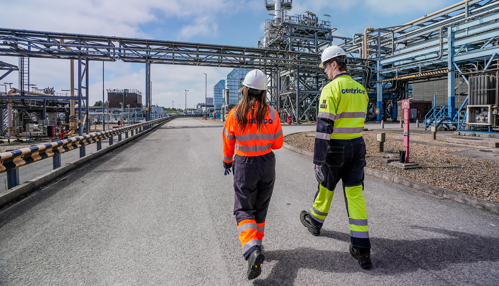
Finding purpose in engineering
For Gabrielle Gill, a Graduate Process Engineer in CES+’s New Energies team, engineering offered the chance to combine technical problem‑solving with real‑world impact.
“I was drawn to engineering because it allowed me to make a genuine difference,” Gabrielle explains. “With the shift towards net zero, being part of an industry shaping a greener future felt meaningful.”
Rather than one defining moment, her interest developed through a series of early sustainability initiatives and STEM experiences, including visits to wind farms and power stations that helped turn abstract ideas into real career possibilities. The pace of innovation and the clear sense of purpose ultimately drew her to a career in low‑carbon energy.
Working at the cutting edge of hydrogen
In her current placement, Gabrielle supports electrolytic green hydrogen projects, working across technical review, stakeholder engagement and project coordination to help ensure key workstreams move forward.
One of the main projects she contributes to is Hydrogen to Humber Easington (H2HE), a large‑scale green hydrogen production development planned for submission to Hydrogen Allocation Round 3. The project will connect into the Humber Hydrogen Pipeline, helping unlock a regional hydrogen economy and support industrial decarbonisation.
“What excites me most is the scale of the impact,” Gabrielle says. “Even small tasks contribute to projects that could reshape entire industries.”
Alongside technical skills, the graduate programme has helped her build strong transferable capabilities, from structured problem‑solving and prioritisation to professional communication, shaping her ambition for a varied, purposeful career.
Learning on the job, close to home
For Joshua Boddy, an Electrical Maintenance Apprentice, a week of work experience while at school at the Easington Gas Terminal opened his eyes to the scale of the energy sector and the opportunities available through apprenticeships.
“Seeing the site and speaking to technicians showed me how someone my age could build a career in energy,” Josh says. That experience led him to apply through CATCH, securing an apprenticeship with CES+.
Today, Josh has worked both onshore and offshore, including time at Easington and on the 47/3B platform, supporting the maintenance of critical electrical systems that underpin safe, reliable operations at the Rough Gas Storage Facility.
“Being involved in work around these systems has been an invaluable experience so early in my career,” he explains.
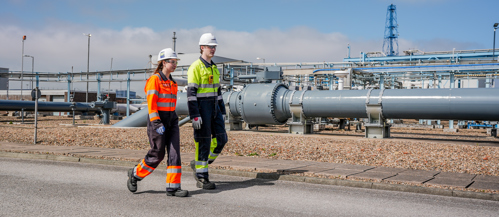
Preparing for a hydrogen future
As hydrogen and low‑carbon infrastructure develops across the Humber, Josh sees first‑hand how new technology can reduce emissions while maintaining reliable energy supply.
“The opportunity to be involved in maintaining the systems behind these projects motivates me to keep developing my skills,” he says.
Through a combination of training and hands‑on experience, his apprenticeship has provided a strong foundation, professionally and technically, while allowing him to build a future in the region.
Why early careers matter
For both Gabrielle and Josh, skilled, well‑paid local jobs are central to the Humber’s future. Hydrogen and low‑carbon projects can cut industrial emissions, attract long‑term investment and create meaningful careers that build on the region’s industrial strengths.
“This kind of investment shapes the world my generation will inherit,” Gabrielle says. “It creates clean industries and long‑term jobs, rather than leaving the consequences of inaction for the future.”
Advice to the next generation
Their message to anyone considering a career in energy or engineering is clear: go for it.
“The work is meaningful, the impact is tangible and the skills you gain open doors far beyond engineering,” says Gabrielle.
Joshua agrees: “An apprenticeship gives you a strong foundation. Once you start, you won’t look back.”
With the Humber emerging as a leading hub for hydrogen and low‑carbon innovation, early careers are not just supporting the energy transition, they’re helping shape it.


